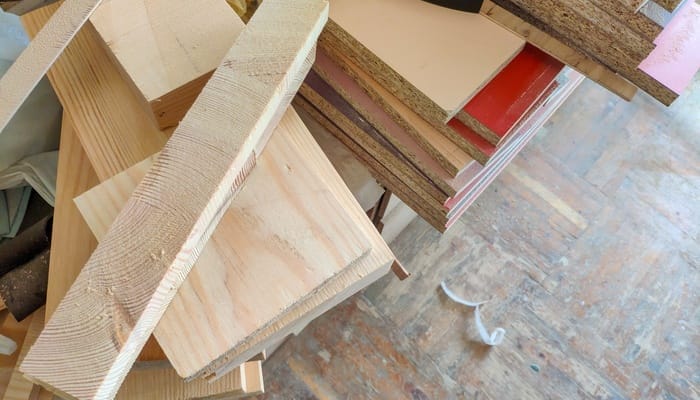
Every woodworking project leaves behind a small stack of offcuts, half sheets, and mystery pieces that seem too useful to toss. However, they tend to accumulate rapidly. Instead of letting leftover scraps gather dust, adopt a strategic plan.
From creating some projects to swapping lumber with your friends, there are so many things you can do with the leftover scraps! With some forethought, these extra boards and panels can be put to good use.
Knowing what to do with leftover lumber and sheet goods keeps your shop organized, reduces waste, and opens the door to creative builds you might not have planned.
Sort and Store With Intention
Sort materials into clear categories so you can see your inventory at a glance. Separate hardwood from softwood, and store plywood, MDF, and melamine in their own sections. Group pieces by size to make future project planning easier.
Smart storage keeps scraps accessible. Use vertical racks for sheet goods and shallow bins for shorter offcuts, and label sections by length. Clear visibility helps you use existing material before cutting into new stock. At the same time, remove warped or moisture-damaged pieces to avoid crowding valuable space.
Build Small Projects That Add Function
Scrap lumber provides the perfect excuse to tackle practical shop upgrades. Instead of viewing leftovers as clutter, treat them as free material for small improvements.
Consider projects such as:
- Clamp racks and tool holders
- Drawer dividers and storage trays
- Router bit organizers
- Shop stools or step platforms
- Test panels for stain and finish samples
These builds sharpen your skills while reducing waste. They also improve workflow in your workspace.
When you approach leftovers with purpose, you answer the question of what to do with leftover lumber and sheet goods in a way that strengthens both creativity and efficiency.
Combine Offcuts for Larger Panels
Short boards don’t always limit your options. Glue-ups let you turn smaller pieces into functional panels, such as cutting boards or laminated surfaces. When needed, you can reinforce joints with pocket screws or dowels for extra stability.
Sheet goods offer another opportunity to maximize material use. If you have several half sheets of plywood, align them for items like cabinet backs, drawer bottoms, or shop jigs. Accurate measuring and layout planning help minimize waste and make the most of your materials. This method also reduces the need for frequent supply runs, saving both time and money.
Sell, Swap, or Share
Not all leftover pieces are suitable for your next project, but another woodworker might need them. Local online marketplaces, woodworking groups, and community boards provide convenient ways to sell or trade excess lumber.
You can also donate usable pieces to schools or community workshops, as many programs welcome small sheet materials and offcuts for student projects. Sharing surplus materials helps keep them in circulation and frees up shop space.
Manage Waste Responsibly
Eventually, materials reach the end of their usefulness, and proper disposal becomes important. Responsible practices for DIY cabinetmaking waste include separating treated lumber from untreated wood, recycling clean plywood when feasible, and avoiding burning materials with adhesives or finishes.
Always check local recycling rules before discarding sheet goods, as some areas accept clean construction wood for recycling. Proper cleanup not only maintains your workspace but also safeguards your community.
Keep Your Shop Clear and Ready
Leftover lumber does not have to become clutter. Organized storage, creative reuse, and thoughtful disposal keep your workspace functional and inviting. When you treat scraps as opportunities rather than inconveniences, you extend the life of your materials and improve your workflow.
With a little planning, every offcut earns its place or makes a clean exit.